Andronix
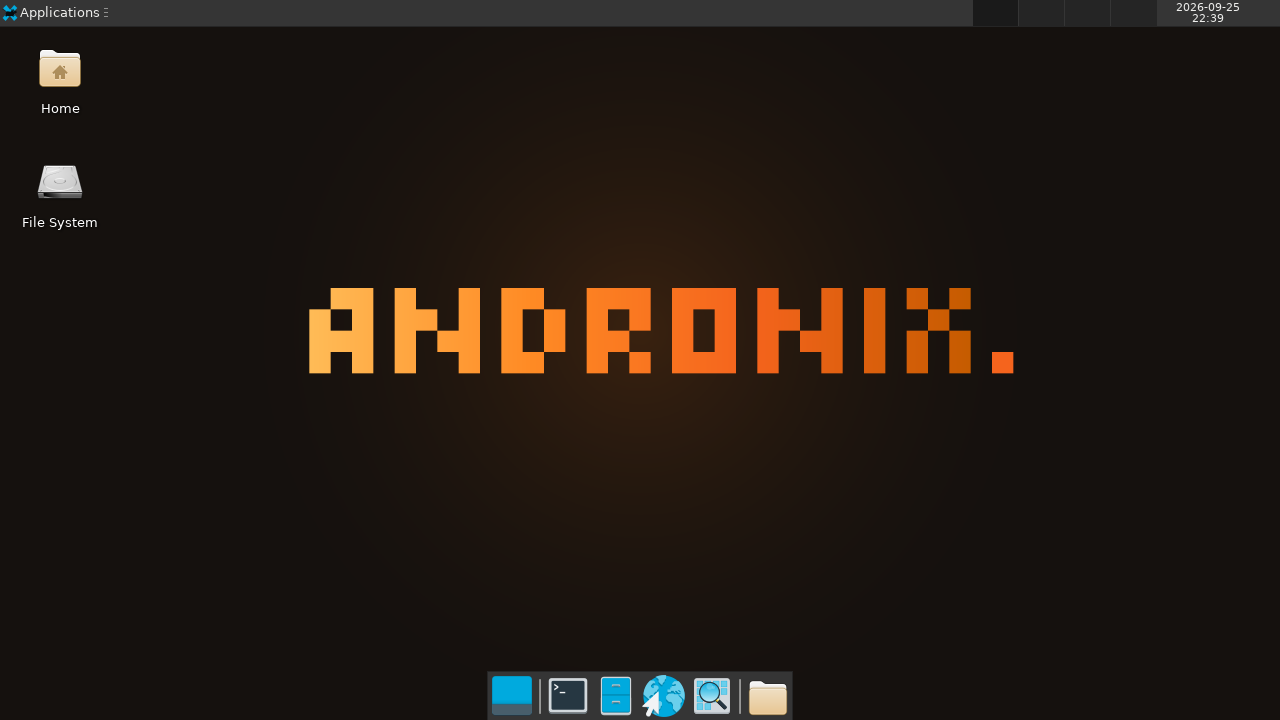
You can run Arch Linux on an Android phone or tablet without rooting it. With Andronix 10.1, Arch and its desktop run right inside the Andronix app, with pacman, a rolling release and a normal user with sudo. There’s nothing else to install and no command to paste. Nothing on Android is changed, and you can remove Arch at any time.
What you get
- Arch Linux ARM, the rolling release for ARM phones: you update the whole system with one
pacmancommand. - A desktop of your choice: XFCE, LXQt or MATE, or the command line only. (KDE Plasma isn’t offered on Arch in Andronix; it’s available on Debian, Ubuntu 26.04 and Kali.)
- Firefox.
- Sound through the phone’s speakers.
- A normal user, not root, with
sudo.
What you need
| Android | 8 or newer. No root. |
| CPU | A 64-bit ARM processor (arm64). Almost every phone from the last few years has one. |
| Free storage | About 3 GB. The app tells you how much it needs before it starts. |
| RAM | No minimum. |
| Apps | Only Andronix, from Google Play. |
Full details: Requirements. On Android 7 or a phone without an arm64 processor, see On older phones: with Termux.
Step 1: Install Andronix
Install Andronix from Google Play and open it. On Home, under Install Linux, tap Linux distros.
Step 2: Pick Arch and a desktop
Choose Arch Linux, then XFCE, LXQt for a lighter desktop, MATE, or Command line only (no desktop). Not sure? See Choose a distro and desktop.
Step 3: Set up your user and install
On Set up your user, enter a User name (lower-case letters and numbers) and a Password (at least 4 characters), then tap Continue. The root account stays locked; use sudo with this password for admin work.
The app shows each step as it goes: checking your device, downloading and unpacking Arch, installing the desktop and Firefox, and setting up your user. It usually takes 5 to 30 minutes. You can leave the app: the install keeps going in the background, with a notification. If it stops, the app says what went wrong and offers Try again.
Step 4: Open the desktop
When it’s done, tap Open the desktop (for a command-line install, Open the terminal). The first start can take a minute.
Later, Arch is on Home under Your Linux. Tap its row to open the desktop, or Terminal to open Arch’s terminal:
cat /etc/os-release
sudo pacman -Syu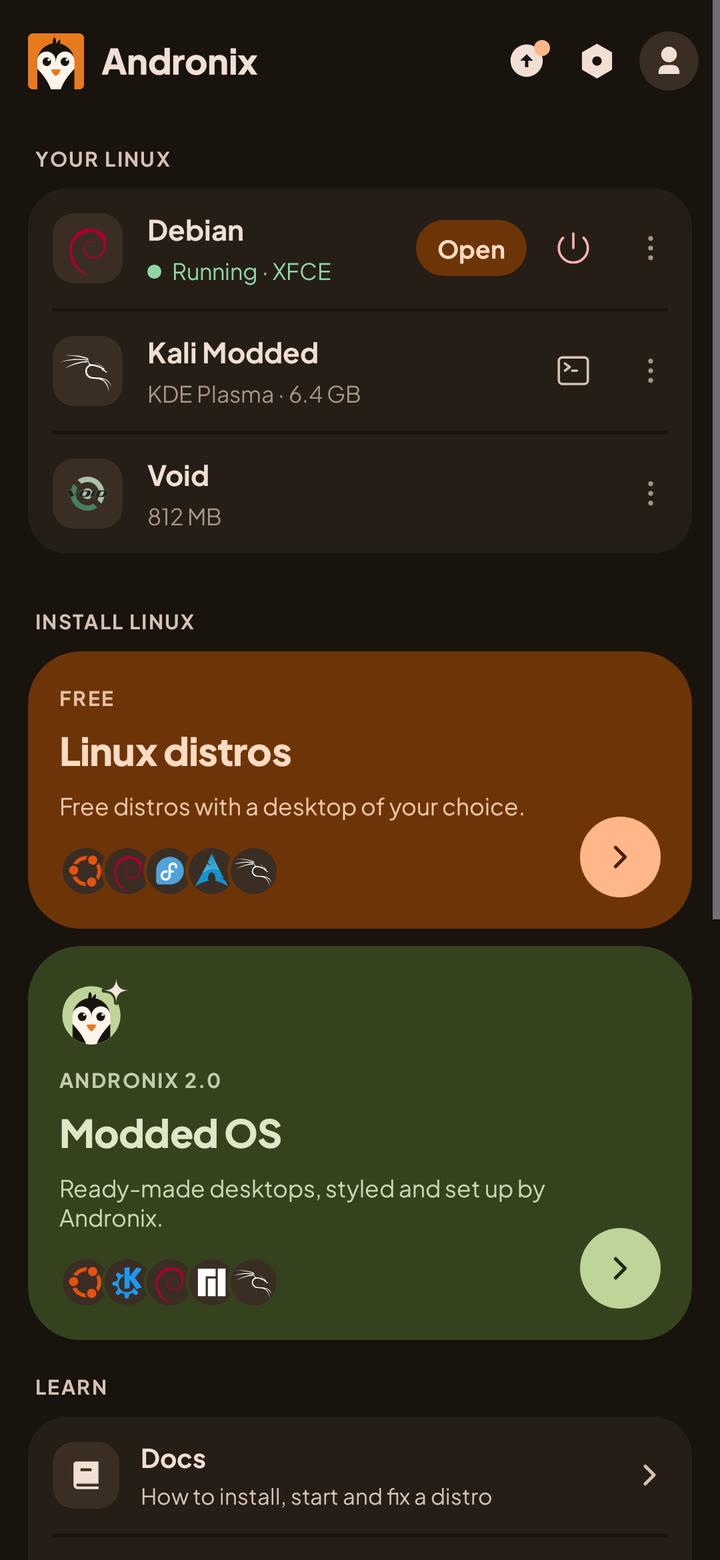
More: Install in the app and Your Linux on Home.
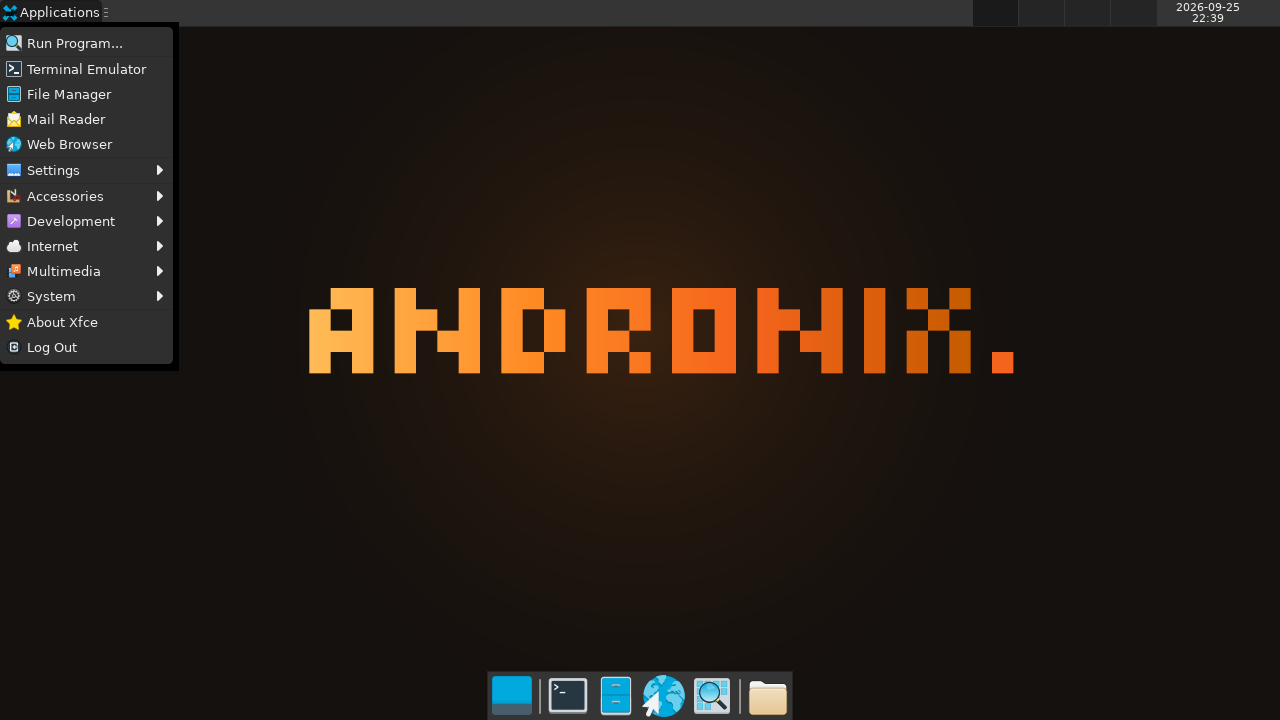
If battery optimisation applies to Andronix, the app shows Keep Linux running once: tap it, so Android doesn’t stop Arch in the background. If Android stops it anyway, the app says Android stopped Arch; tap that to start it again. See Process completed (signal 9).
Keeping Arch healthy
Arch is a rolling release, so a few habits matter more than on Debian or Ubuntu:
- Update everything at once with
sudo pacman -Syu, and do it before you install something new. - Avoid partial upgrades. Don’t run
pacman -Sy <package>: refreshing the package lists without upgrading the rest can break programs. Usesudo pacman -Syu <package>instead. - Keep copies of important files before big updates. There’s no backup inside the app yet, so save them to
~/Android/Downloador~/Android/Documents, which appear in Download/Andronix and Documents/Andronix on your phone (Android files in Linux).
| To | Do this |
|---|---|
| Open the desktop | Home > Your Linux, tap Arch’s row |
| Open Arch’s terminal | Tap Terminal on Arch’s row |
| Update Arch | sudo pacman -Syu, in Arch’s terminal |
| Install a program | sudo pacman -S <name> |
| Add Python, Node.js, Java, Go or PostgreSQL | sudo andronix pack add python (or node, java, go, db) |
| Bring a file in from Android | Import in Settings › Linux › Android files in Linux |
| Remove Arch | Home > Your Linux > ⋮ > Remove |
What doesn’t work
Arch runs in user space with proot, on Android’s own kernel, so some things are out of reach without root: Snap, Flatpak and Docker, VPNs or hardware such as USB drives, and the microphone (for now). Packages that load their own kernel modules won’t work either. GPU acceleration is experimental and off by default; see GPU acceleration. The full list: Limitations.
Common questions
Arch or Manjaro?
Both use pacman. Arch gets updates as soon as they’re released. Manjaro ARM is also available, but in Andronix its sudo doesn’t work yet, so in the app you use the root terminal for admin work. See Supported distros.
Why “Arch Linux ARM”?
Arch Linux itself only builds for x86_64 PCs. Phones use ARM processors, so on a phone Andronix installs Arch Linux ARM, the community port that follows Arch closely.
Do I need root?
No. Nothing on Android is modified. Arch lives in the Andronix app. To delete it, open Home > Your Linux, tap ⋮ next to Arch, then Remove.
On older phones: with Termux
On Android 7, on a phone without a 64-bit ARM processor, or if you prefer the command-line installer, Andronix runs Arch in Termux instead (on x86_64 devices, that’s Arch Linux itself). Install Termux from F-Droid (recommended), the Termux project’s GitHub releases, or Google Play (Android 11 and newer), then paste this line into it:
(curl -fsSL --retry 4 --retry-delay 3 https://dl.andronix.app/get.sh -o $PREFIX/tmp/get.sh || curl -4 -fsSL --retry 2 --retry-delay 3 https://dl.andronix.app/get.sh -o $PREFIX/tmp/get.sh) && sh $PREFIX/tmp/get.sh install arch --de xfceThe whole Termux setup, with the desktop: Andronix with Termux and the docs.
Next steps
- Your Linux on Home: open, stop and remove your distros.
- Dev packs: Python, Node.js, Java, Go and PostgreSQL with one command.
- Stuck? Linux in the app: limits and problems, or ask on Discord.